
High-use spaces
Identify the entry, restroom, break area, or shared room where building maintenance services needs the clearest frequency.
Serving New York, New York & surrounding areas
Mon–Fri 8am–6pm Sat 9am–2pm
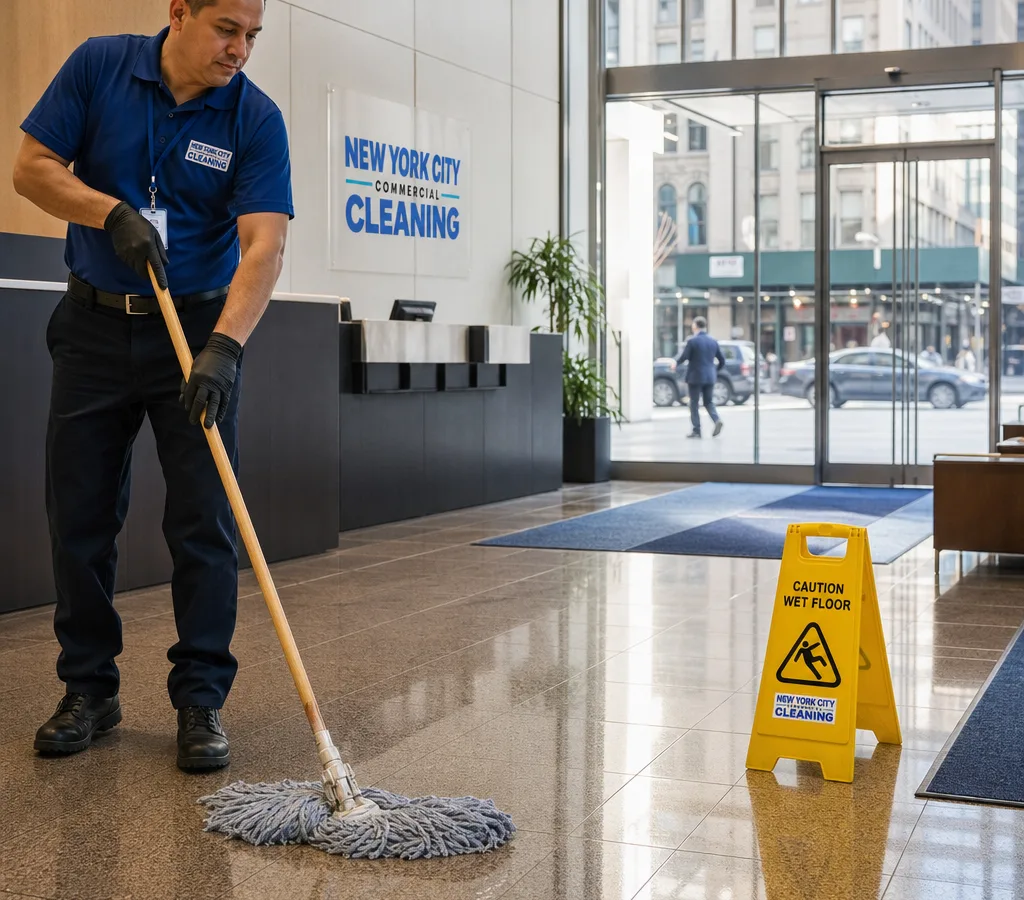
Building maintenance · New York City
Keep your building clean, safe, and tenant-ready with scheduled maintenance, responsive porter service, and clear reporting for business properties across NYC.
Introduction
Building maintenance services for New York City commercial properties, with attention to common areas, routine upkeep, and tenant-facing spaces.
Building maintenance has to work across the places tenants and visitors share: lobbies, corridors, elevators, entry mats, restrooms, and staff service routes.
The right scope separates regular cleaning from practical upkeep tasks and gives property teams a way to prioritize the areas that affect daily tenant experience.
For building maintenance services in New York City, the useful scenario is often a building team trying to solve more than a visible mess. A Friday restroom issue, a heavily tracked entryway, or a late meeting can change the work that needs to happen before the next day begins.
A stronger building maintenance services scope identifies the first rooms people see, the routes where materials or waste move, and the tasks that need an owner when the normal schedule is interrupted. That gives the site contact a practical way to ask for a change without rewriting the entire plan.
Task list
The building maintenance services task list should name the areas that need recurring attention before small misses become the next shift's problem.
Identify the entry, restroom, break area, or shared room where building maintenance services needs the clearest frequency.
Document elevator, security, delivery, and occupancy constraints before scheduling the building maintenance services window.
Separate routine building maintenance services work from the floor edges, fixtures, and rooms that need planned deeper attention.
For building maintenance services, frequency should follow actual use rather than an arbitrary calendar. Within building maintenance services, a lobby may need a different rhythm from a private office, while a restroom, break area, or high-touch common room can need a check tied to its busiest period.
Process
Before service begins, the plan can document access rules, service-elevator use, public-area priorities, and the communication path for changing property conditions.
Map the rooms, surfaces, and traffic points that set the daily building maintenance services priority.
Set building maintenance services task frequency, access details, and the handoff point for questions.
Revisit the building maintenance services plan when occupancy, weather, or building operations shift.
Before a building maintenance services visit begins, confirm who opens the building, where supplies or equipment can be staged, and what happens if a service window changes at short notice. For building maintenance services, those small details prevent a crew from arriving with no usable path through the property.
In occupied New York City properties, a building maintenance services plan also needs a route around disruption. Freight elevator windows, occupied-floor noise limits, deliveries, and after-hours access can change the order of work even when the task list stays the same.
Benefits
A written building maintenance services scope reduces uncertainty about what was handled, when it happened, and where a change should be raised.
During building maintenance services reviews, ask what changed in occupancy, access, weather exposure, or room use since the last check. Those questions keep recurring work connected to the actual building instead of a checklist that no longer fits.
The benefit of a clearer plan for building maintenance services is not simply a cleaner room. It is less time spent wondering whether a missed task was outside the scope, delayed by access, or left for the next visit without anyone being told.
Why
Building Maintenance Services works best when the plan reflects its real traffic, access, and room-use conditions.
When evaluating building maintenance services, ask which areas create the most complaints, which tasks staff are doing themselves, what access rules cannot be changed, and how the building should communicate an exception. For building maintenance services, the answers help turn a general request into a workable plan.
What makes building maintenance services work in a New York City building is the fit between the task list and the operating day. A routine that ignores elevators, tenant traffic, closing times, or occupied-floor restrictions creates more exceptions than it solves.
Pricing
For building maintenance services, frequency, room mix, access windows, floor conditions, and special timing all affect how a service plan is considered.
A building maintenance services walkthrough makes it possible to discuss the actual work instead of relying on a generic estimate.
For building maintenance services, a quote is shaped by the rooms included, requested frequency, floor and surface conditions, access windows, and the amount of detail needed after routine work. A walkthrough is where those variables become a usable scope rather than an assumed number.
Trust
For building maintenance services, clear access steps, named tasks, and a practical contact path are more useful than vague assurances about service.
A useful quality check for building maintenance services is specific: look at the entry condition, restroom readiness, floor paths, waste points, and the rooms named in the scope. For building maintenance services, this makes feedback actionable instead of leaving the site contact to describe a vague problem.
A building maintenance services handoff should leave the site contact with a simple answer to three questions: what was completed, what could not be reached, and what needs attention before the next scheduled visit. That record prevents staff from guessing after an exception.
Other services
For building maintenance services, the scope can connect to other cleaning needs when the building's traffic, surfaces, or schedule changes.
Use these related service pages when the issue is broader than one room or one shift, but keep the current building maintenance services priorities visible in the handoff.
Call to action
Bring the schedule, access limits, and rooms that need attention to a first conversation about building maintenance services.
For building maintenance services, the more clearly you can describe the problem areas and the building window, the easier it is to start with a realistic scope.
Request a quote
Share a few details about your space and cleaning schedule. Our New York team will follow up with a clear, practical estimate.
452 Concord Ave Unit 5, New York, NY 10455